
From Customer Data to Campaigns That Feel Personal

The short version
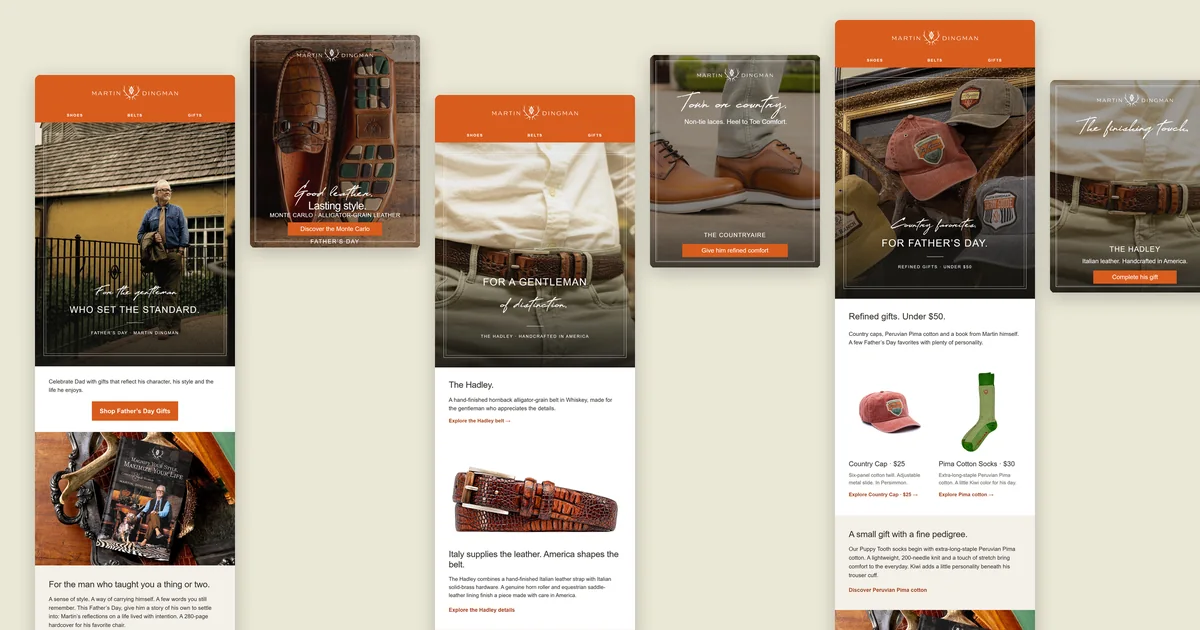
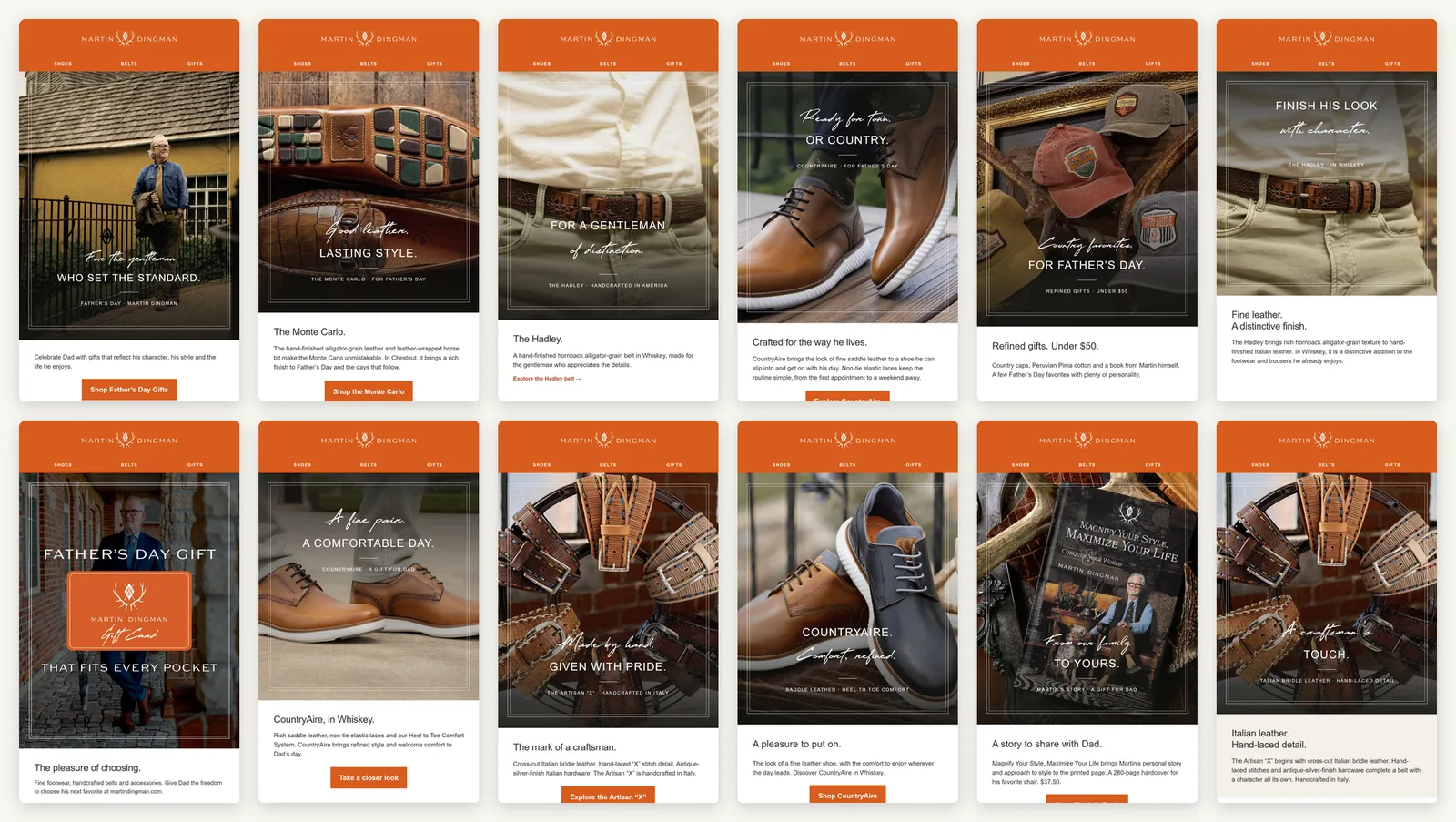
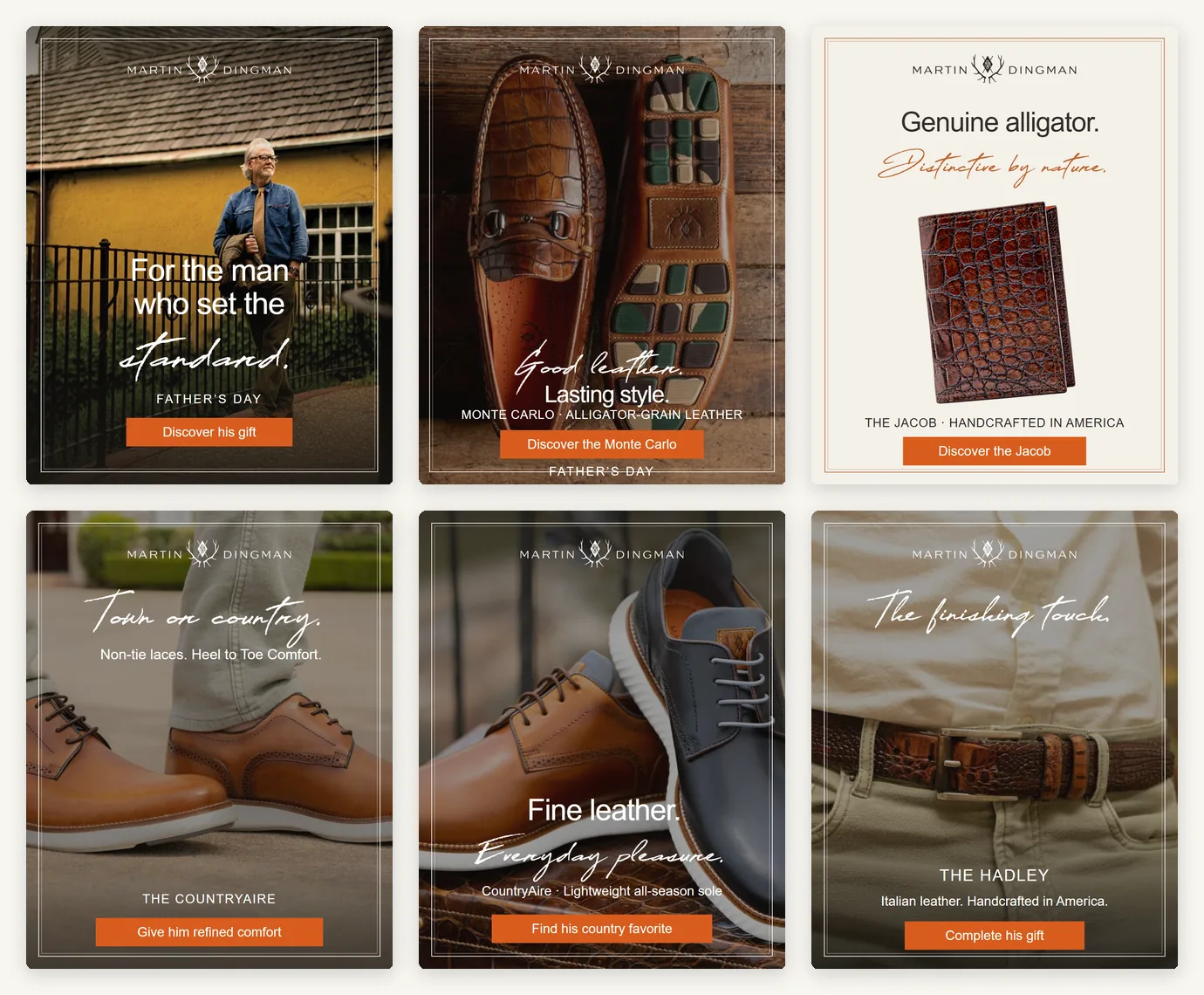
Most brands already know who their best customers are, who’s drifting away and who mostly buys gifts. We connect that customer data to AI agents and LimeLight Studio so each audience gets its own product edit, message and creative across email and paid social, in one consistent brand. For Martin Dingman’s Father’s Day campaign, that meant six audiences, 12 emails and six matching Meta ads, built from one warehouse and one design system.
Most ecommerce brands we work with already have the data to know their customers pretty well. Shopify holds every order, Klaviyo knows who opens and who clicks, and there’s usually a persona study or lifetime value analysis that got presented once and then lived in a slide deck.
Then the Father’s Day email goes out, and everyone gets the same one.
That’s rarely a strategy problem. Building six versions of a campaign has always meant six times the design, copy and QA, so the customer insight stays on the dashboard and the campaign goes broad. We’ve been closing that gap, and the Father’s Day campaign for Martin Dingman, the family-owned leather footwear and goods brand, is a clear picture for what it can look like.
What the agents look at first
The starting point is our data warehouse. For Martin Dingman it holds Shopify orders down to the product line, Klaviyo email and SMS engagement, Google and Meta ad performance, modeled persona and demographic profiles, and a customer table that scores every buyer on recency, frequency and monetary value. Our AI agents work through aggregate, privacy-masked tools, so they see segment sizes and patterns, never an individual customer’s record.
RFM sounds technical, but it’s three plain questions. How recently did this person buy? How often do they buy? How much have they spent? Put the answers together and you can tell a loyal regular from a big spender who’s gone quiet, or spot a first-time buyer who’s right where a second order tends to happen. That’s the core of our segmentation and behavior prediction work.
Personas answer a different question: who this customer is, how they shop and what they value. They’re modeled from demographic data, so we treat them as context.
That’s why the two jobs stay separate. Purchase behavior decides which audience someone belongs to and when to reach them. Persona and demographic context shapes what they see, from the product to the photo to the wording. Audiences are assigned in priority order, so each customer lands in exactly one and nobody gets two versions of the same campaign.
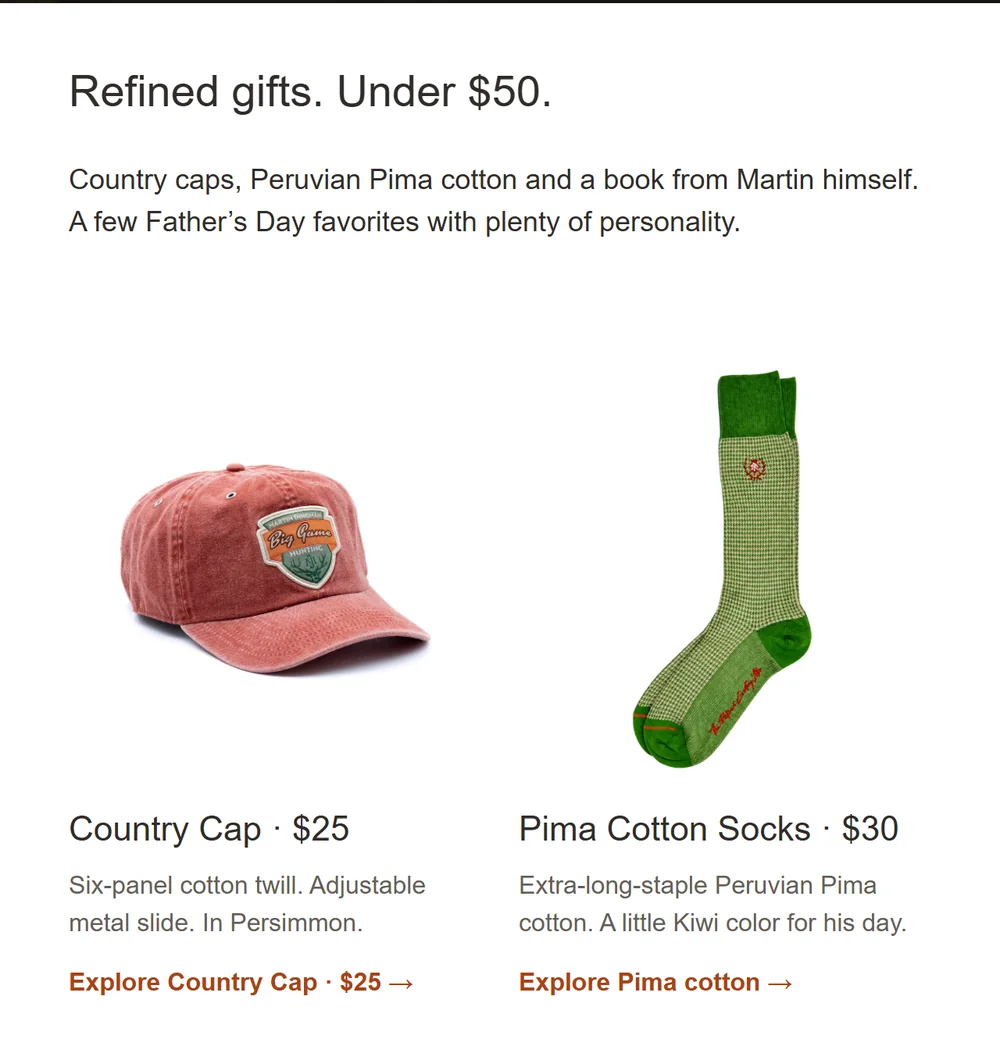
Here’s how that changes an actual decision. One audience is built around a persona we call Practical Value, and the reflex with a group like that is to send a discount. The order history says otherwise, because 74% of them buy at full price. So their emails lead with well-made gifts under $50, like the $25 Country Cap and $30 Pima cotton socks, and there’s no promo code anywhere.
Six audiences, six reasons to buy
Each audience gets its own brief with a product selection, a message, an image direction and a call to action. A gift shopper and a repeat high-value customer are buying for different reasons, so they get a different nudge. The gift shopper needs confidence, which is why that journey ends on a digital gift card. A lapsed regular already trusts the leather, so the Monte Carlo loafer does the talking.
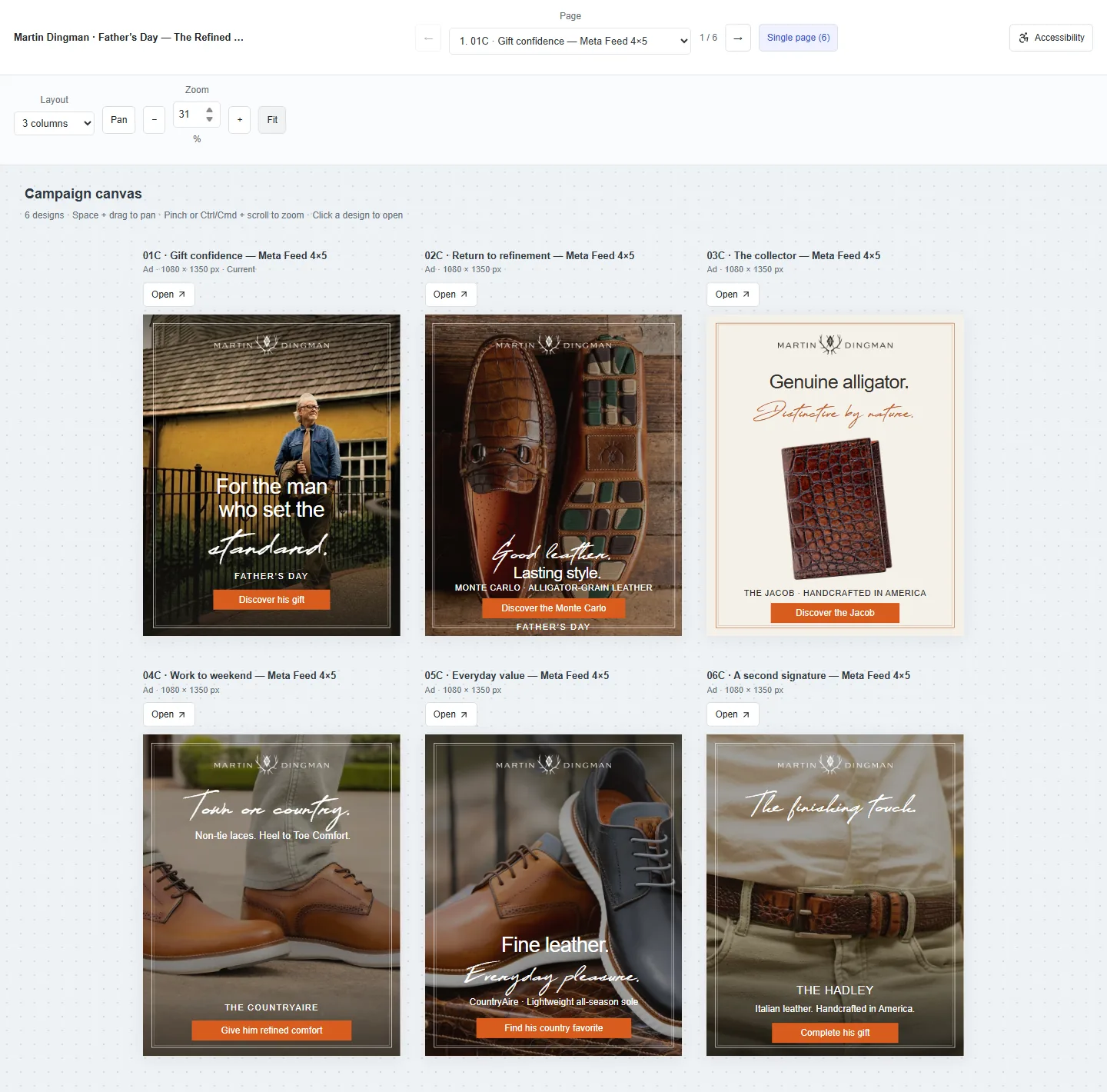
SIX AUDIENCES, ONE CAMPAIGN
Customer signal, then the decision it drove, then the creative

Gift confidence
Customer signalGifting and holiday purchase history.
Marketing decisionMake choosing easy: a curated gift edit, plus a gift card for the unsure.
In the emailsMartin’s book and the Jayden crocodile wallet, then “His style. His choice.” with a digital gift card.

Return to refinement
Customer signalAt-risk RFM: valuable past customers who haven’t ordered lately.
Marketing decisionBring them back through the leather quality they already know.
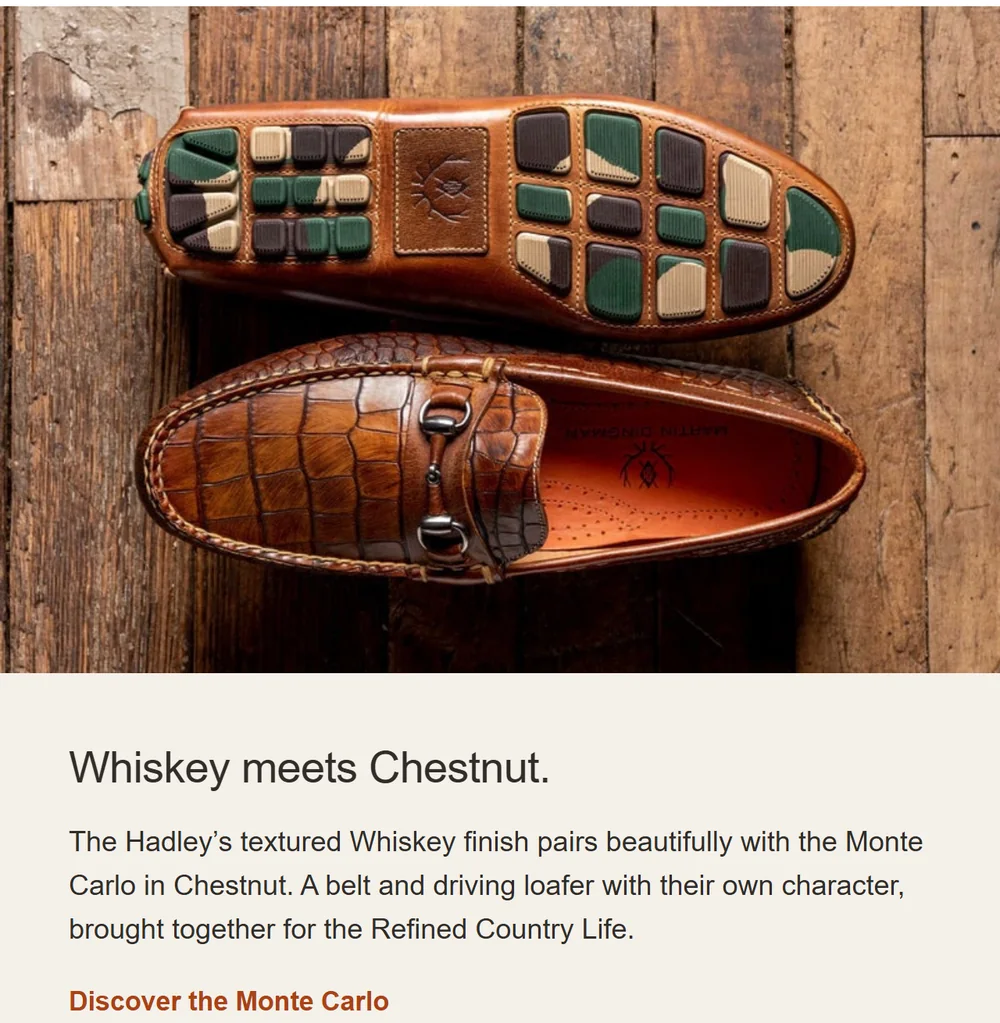
In the emailsThe Monte Carlo loafer in Chestnut alligator-grain leather, then CountryAire in Whiskey.

The collector
Customer signalLoyal customers with family and retiree persona profiles.
Marketing decisionLead with distinctive materials and craftsmanship.
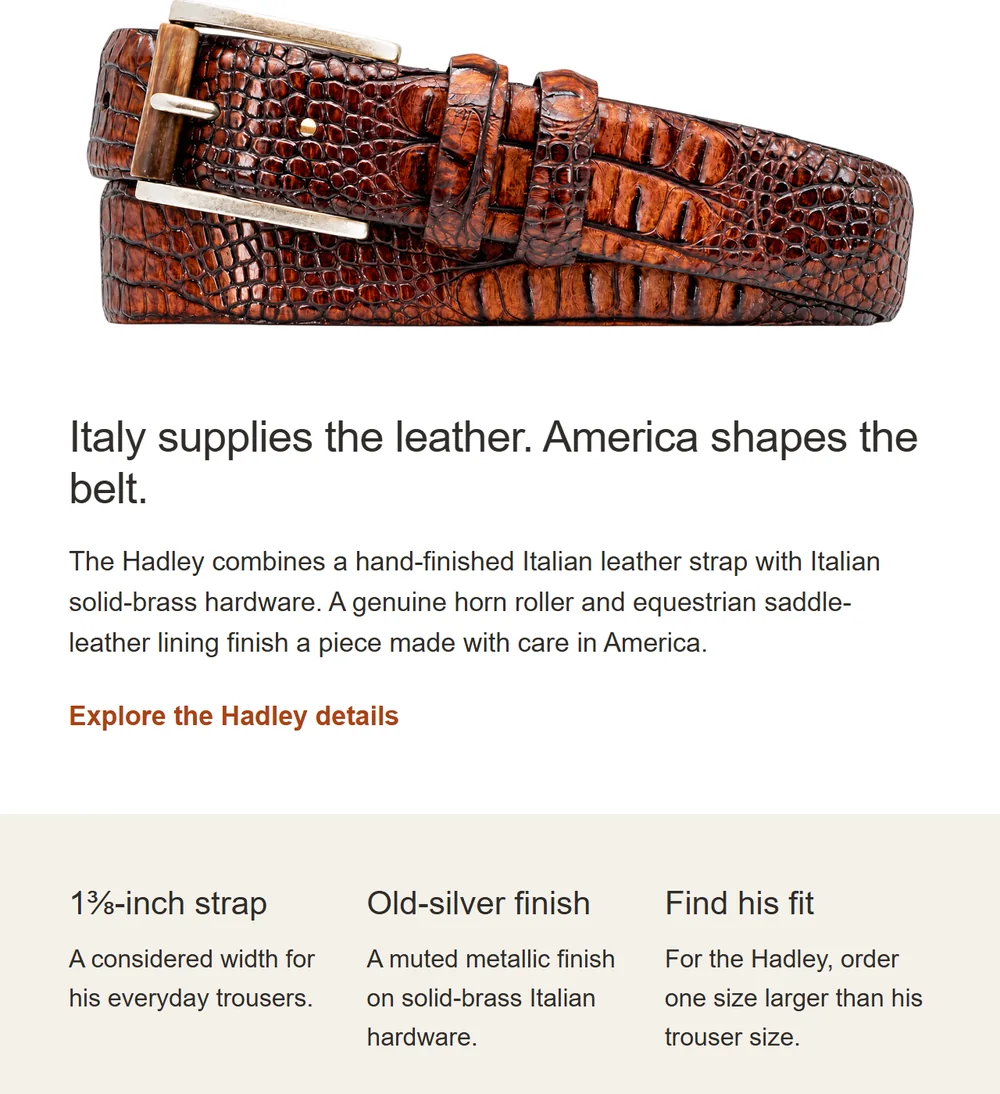
In the emailsThe Hadley hornback alligator-grain belt and the Jacob genuine alligator wallet, then the Artisan “X” belt.
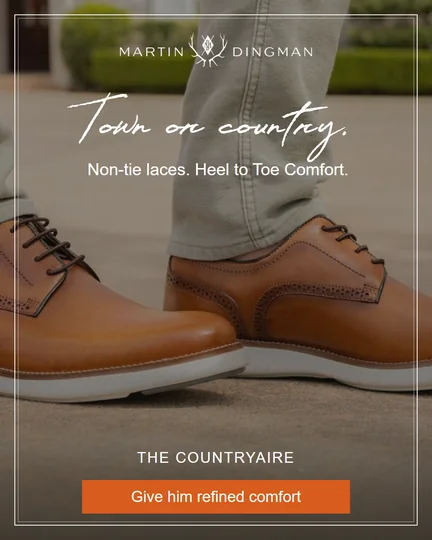
Work to weekend
Customer signalOnline professional persona.
Marketing decisionSell comfort that lasts from the first meeting to the weekend.
In the emailsCountryAire with non-tie laces and the Heel to Toe Comfort System, plus Pima cotton sneaker socks.

Everyday value
Customer signalPractical value persona, with 74% buying at full price.
Marketing decisionLead with lasting usefulness. No discount.
In the emailsRefined gifts under $50: the $25 Country Cap, $30 Pima cotton socks and Martin’s book.
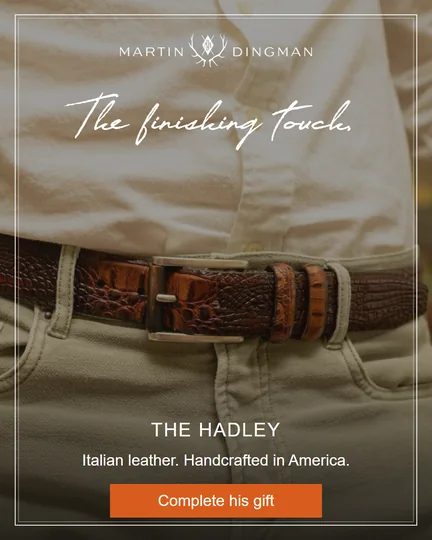
A second signature
Customer signalOne-time buyers inside their repeat-purchase window.
Marketing decisionIntroduce a complementary product for the second order.
In the emailsThe Hadley belt styled with the Monte Carlo, then the hand-laced Artisan “X” belt.
Where LimeLight Studio comes in
LimeLight Studio is the tool our team uses to build and review this creative. It starts from the brand’s own design system. Here that was Martin Dingman’s existing Father’s Day email, which we imported as the baseline. The typography, the orange header, the photography treatment, the script accents and the voice carry into every variation, so the set reads as one campaign even though each audience sees different products.
Every asset lives on a shared board like the one above, so the team reviews the family together instead of one file at a time. Feedback goes back into Studio, the variations get revised, and the board updates.
Up close, the detail holds. These are crops from three of the emails at full size.
How the workflow fits together
Here’s the whole loop, from warehouse to the next brief.
HOW THE WORKFLOW CONNECTS
From warehouse signal to the next campaign brief
Step 1
Customer signals
Warehouse with Shopify orders, Klaviyo engagement, Google and Meta ad results, and modeled personas.
Step 2
Agent analysis
RFM, product affinity, lifecycle stage and persona context, read in aggregate.
Step 3
Audience briefs
Six non-overlapping audiences, each with a product edit, message and call to action.
Step 4
LimeLight Studio
12 emails and six 4:5 Meta ads built in the brand’s own design system.
Step 5
Human review
One shared board, team feedback, revisions and approval.
Step 6
Activation
Emails send from Klaviyo and ads run in Meta, set live by our team.
Step 7
Measurement
Email engagement, ad results and Shopify orders flow back to the warehouse.
Step 8
Next brief
What each audience responded to shapes the next campaign, starting again at step one.
Everything through the review board is what we built and walked through for this campaign. Launch runs through the platforms the brand already uses: the emails go out from Klaviyo to the matching segments, and the ads run in Meta against the matching audiences. Our team sets both live after approval.
Measurement closes the loop. Klaviyo engagement, Meta results and Shopify orders all land in the same warehouse the agents started from, so the next brief starts with what each audience actually responded to. If you want the plumbing side of that, our connected data systems work is where it lives.
What this changes for a brand
Relevance is the obvious win. When the product and the reason to buy fit the person reading, choosing gets easier, and easier choices are what move conversion.
The bigger shift is repeat business. RFM shows you who’s in the window for a second order and who’s starting to drift. Those are the two moments where a relevant, well-timed message does the most for retention, and a generic campaign treats them like everyone else.
Then there’s learning. Six audiences with six product and message angles give you six readouts inside one campaign. You find out whether lapsed customers come back for familiar leather or something new, and whether practical buyers respond to price points or craftsmanship, and that answer feeds the next round.
All of it depends on the variations looking right. We put the work into Studio so the twelfth email holds the same standard as the first, which means testing more never has to mean diluting the brand.
Bring your customer data to the next brief
If your customer data mostly lives in reports right now, that’s a fine place to start. We’ll look at what you already have in Shopify, Klaviyo and your ad accounts, find the audiences worth separating, and build a coordinated email and ad family for your next campaign in your own brand’s look.
This sits inside our email and SMS marketing and data-driven personas programs. When you’re ready, start a conversation with our team about your next campaign.