

Instagram Stories drive real-time engagement, while posts build long-term visibility and brand equity. A strong content mix using both formats helps brands maintain reach, authenticity, and consistent audience interaction.
If we were to ask you to name the most popular social media platforms for marketers, what would your list be? It would probably include Facebook, Instagram, TikTok, Twitter (errr…X?) and maybe YouTube, Snapchat, Pinterest, Reddit or Threads, depending on the organization.
Very rarely, if ever, does Stories get listed as a standalone platform. Why? It’s likely because Stories lives within Instagram, so marketers don’t often view it as a standalone platform that needs its own strategy. But it’s time to start treating Stories differently than Instagram Posts, because it has evolved into a social platform worthy of its own strategy, content and marketing plan.
Instagram Stories vs Posts
If it helps, Instagram should be broken into two platforms: “Stories” and “Posts”. You can even make an argument that Reels should be a third, but that’s a discussion for another time.
Posts are what you may think of as traditional Instagram – a photo or video post that goes out to your followers on their feeds and lives in your grid.
Stories are the short, vertically-oriented photos and videos you share that put the colored ring around your profile photo, signifying to your followers that there’s something they haven’t seen yet.
How Instagram Stories get used
To help make the case for why different content types and strategies should be used for Stories vs Posts, it’s first helpful to know some information about how users and using each.
According to data released by Truelist earlier this year, nearly 86 percent of Instagram users are active on Stories. That’s a huge number, and a big reason why Instagram has prioritized Stories as much as they have since creating the Snapchat copycat feature seven years ago. Despite that number however, almost two thirds of users say that when it comes to consuming content, they’d rather scroll through their feed than watch Stories.
These are important data points for marketers to consider when planning content. Users are more familiar with creation on Stories, perhaps because of the more UGC-style feel to them, but from a consumption perspective, a Post is going to get more impressions.
Different features
One reason why Stories and Posts are deserving of their own strategies is because they have many different features. Below are just a few, and when you as a marketer might want to use each.
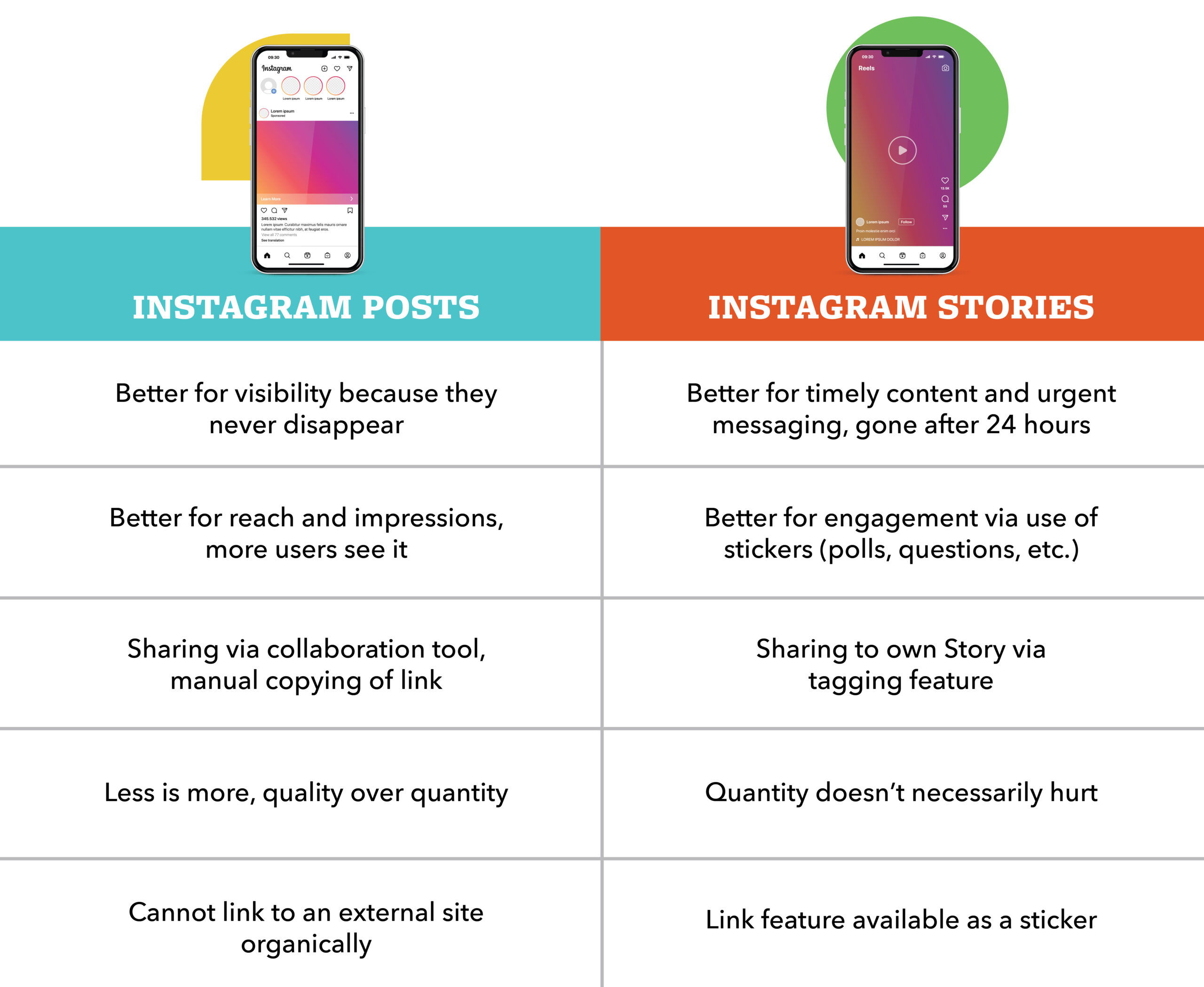
This, of course, is not a comprehensive list but just a snapshot of a few ways in which the platforms differ.
What about paid social advertising?
If you’re running paid social for an organization, you’ll want to view Posts and Stories separately here too. In the advertising arena, Meta has given a clear advantage to Posts over Stories, both in versatility and efficiency.
- Versatility: There are many more options to advertise with Posts than Stories. For starters, Meta allows more Post placements, with more different aspect ratio options, giving your ads a better chance of success.
- Efficiency: In almost every ad objective, creating or boosting Posts is going to be a better ROAs than Stories. This is because Posts are being seen by more users than Stories, allowing the platform to better optimize the right type of content to the right users. Posts have shown better clickthrough rates, costs per click, and costs per conversion than Stories. While abandoning Stories altogether from your paid strategy isn’t ideal, more weight should be given to Posts to maximize your spend.
“Wow!!! I absolutely love it! I can’t believe how beautiful the design is.
Thank you for bringing my brand to life in this way. The icons even
included “not a commodity.” Doug loved it! This box is good to go.”
Fabiola Corvera-Stimeling, Owner, Straight Up Bison
Use both Posts and Stories, but use them differently
In an ever-changing social landscape, it’s important to keep a finger on the pulse and understand where your audience is. Chances are, they’re consuming both Stories and Posts, but doing so very differently. As such, your content should be catered to their consumption habits. If you have a campaign style, evergreen message or something highly curated where you want to maximize reach, a Post is a better option. If you’re looking for a timely, fun, or engaging message, consider creating a Story.
Social strategy is constantly evolving, and what we know is what works today probably won’t work tomorrow. But as long as it’s today, consider a separate content strategy and plan for your Posts and your Stories.
Interested in taking your social strategy to the next level? Let’s chat.
This post was contributed by Jaryd Wilson.