Your Website Wasn’t Built for AI And It’s Costing You Traffic

Your rankings didn’t drop. Your SEO didn’t fail. Your content is still strong.
But your traffic is down anyway.
The culprit? AI answered the question before anyone clicked through to your site. Google’s AI Overviews, ChatGPT search, Claude, Perplexity… they’re all keeping visitors away from your website by serving answers directly. And if your site isn’t built for AI to read, you’re not just losing clicks. You’re becoming invisible.
In a recent webinar, John Kuefler, Senior Director of Digital Experience at LimeLight Marketing, broke down what most ecommerce brands are getting wrong and what needs to change. The findings are stark: the average ecommerce site scores 8.7 out of 100 on AI extractability. That’s not a failing grade. That’s a “start over.”
Here’s what’s actually happening, why it matters, and what you can do about it.
How AI Actually Discovers Your Brand (Hint: It’s Not Like Google)
When someone types a question into ChatGPT, Claude, or Perplexity, two things happen behind the scenes.
First, if the query is transactional or commercial and mentions a specific brand, the AI tries to read that brand’s website directly to pull answers from the source. Second, it searches the web and uses its knowledge base to provide supplementary information, often pulling from Reddit, YouTube transcripts, Wikipedia, and third-party review sites.
It combines both to generate a recommendation.
The problem? Most ecommerce websites weren’t built for machines to read them. They were built for humans. Beautiful hero banners, JavaScript-heavy pages, infinite scroll, image carousels – these create great user experiences for people. They create terrible experiences for AI.
“Now we have to think about two different types of user experience on our website,” Kuefler explained. “The user experience for people, which is extremely important, and the user experience for AI scrapers, crawlers, and LLMs, which is becoming more and more important as well.”
The Extractability Problem: What AI Actually Sees
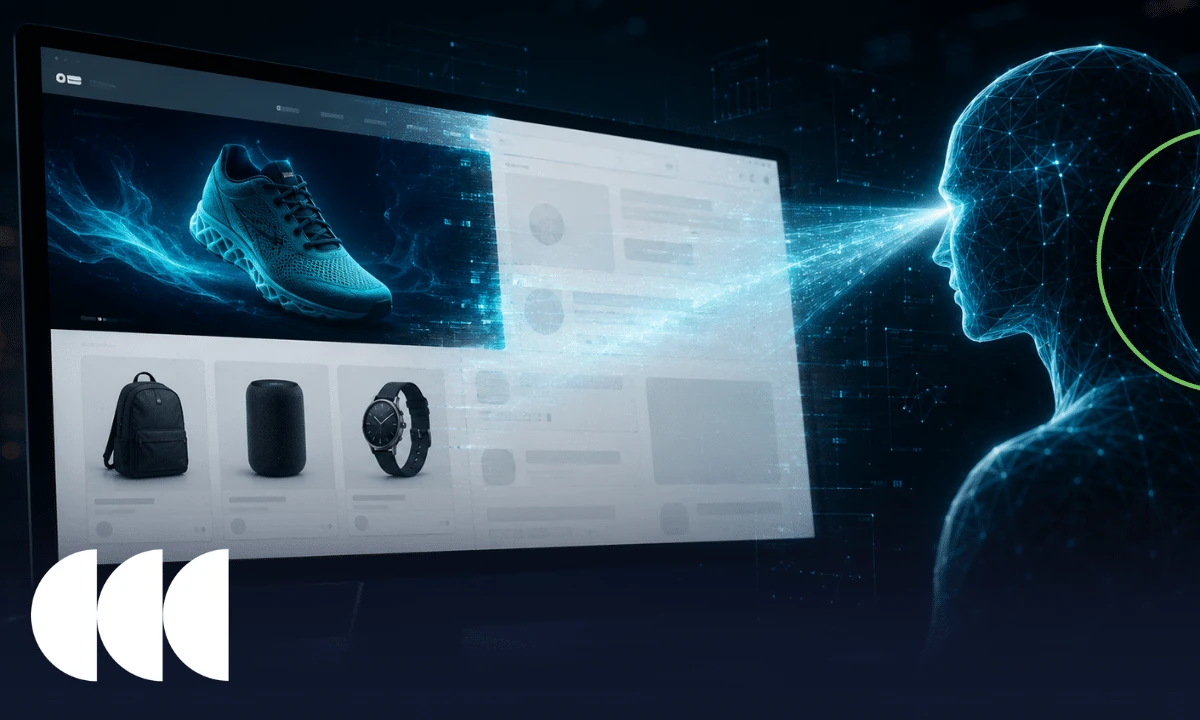
Here’s what most brands don’t realize: AI doesn’t see your website the way you do.
When AI crawlers scan a page, they extract something called Markdown, a simplified version of your HTML that strips out most of the visual elements. If your site is dominated by images, carousels, and JavaScript, the AI might extract nothing more than your navigation and footer. The entire middle of the page? Blank.
Take product ratings as an example. A product with a 4.5-star rating and 581 reviews is a strong signal of quality for humans. But if the star rating is displayed as an image or icon without accompanying text, AI only sees “581 reviews.” It has no idea what the rating actually is.
The fix is simple: Add the star rating in text form next to the graphic. “4.5 stars (581 reviews)” is machine-readable. A graphic alone is not.
This problem is pervasive. Homepage extractability is particularly bad because homepages are dominated by imagery and design elements AI can’t parse. Product detail pages fare slightly better, but most still fail to communicate the basics – pricing, availability, ratings, product features – in a way AI can understand.
Out of all the brands LimeLight has analyzed, the average extractability score is 8.7 out of 100. That’s worse than an F.
What Other People Say About You Matters More Than What You Say About Yourself
Here’s the uncomfortable truth: earned marketing is now more important than on-page optimization.
AI models don’t just scrape your website. They pull heavily from third-party sources—and what those sources say about you carries more weight than what you say about yourself.
The most-cited sources? Reddit, YouTube transcripts, and Wikipedia.
YouTube, in particular, was a surprise. “Besides Reddit, YouTube transcripts were cited the most out of any other third-party content set,” Kuefler noted. These aren’t official brand videos. They’re creators talking about your products – sometimes positively, sometimes not.
Even negative mentions can help. A video titled “Ruggable is Expensive—Here’s a Cheaper Alternative” still contributes to Ruggable’s visibility in AI overviews because the brand is being mentioned in a relevant comparison.
The implication? You can’t control the conversation entirely, but you need to influence it. That means:
- Partnering with creators who review or mention your products
- Monitoring Reddit for brand mentions and engaging where appropriate
- Establishing a Wikipedia page (factual, neutral, no promotional language)
- Getting featured in listicle articles and comparison pieces on trusted sites
For apparel brands, sites like The Good Trade and Who What Wear are frequently cited by AI models. For other verticals, the trusted sources vary, but identifying which sites AI trusts in your category is now a strategic priority.
SEO Isn’t Dead, But It’s No Longer the Lead Strategy
The question every marketer is asking: Is SEO dead?
The answer is nuanced. Traditional SEO tactics – keyword clustering, ranking for specific search terms, optimizing for blue links – still matter for transactional searches. When someone is ready to buy, you want your product showing up in Google’s traditional search results.
But for informational queries? It’s nearly worthless.
“There are a lot of brands that spend a lot of time building up great libraries of content on their site, only for people to no longer visit their site because that content is now just being referenced in an AI overview,” Kuefler explained. “It’s great to get the citation link for that, but those links aren’t clicked very often.”
The shift is from keywords to questions. Traditional SEO revolved around phrases like “best running shoes” or “best running shoes for wide feet.” Now, people ask full questions: “I have flat feet and I’m starting to run – what’s the best shoe under $150?”
Your webpages need to be extractable and answer those questions directly. If AI can’t pull a clear, concise answer from your page, it’ll pull from someone else’s.
Different AI Models Have Different Personalities (And Preferences)
Not all AI platforms evaluate content the same way.
ChatGPT favors established brands and frequently references Wikipedia to verify credibility and authority. If your brand doesn’t have a Wikipedia page, ChatGPT is less likely to recommend you.
Claude hedges more and pulls from a mix of Reddit, listicle sites, and brand websites. It prioritizes fresh, relevant content and tends to balance multiple perspectives.
Perplexity loves Reddit – sometimes to a fault – and heavily weighs dated sources. If your product pages don’t include “last updated” timestamps, Perplexity may deprioritize your content in favor of competitors who signal freshness.
Google AI Overviews blend all of these approaches but prioritize structured data and schema markup.
The takeaway? You can’t optimize for just one platform. A comprehensive AEO (Answer Engine Optimization) strategy addresses extractability, earned media, schema markup, freshness signals, and third-party authority across all major AI models.
Schema Markup and Alt Text: The Underrated Essentials
Schema markup was originally designed for Google to create richer search results. Now, other AI platforms are leveraging structured data to extract key information.
The most important schema elements for AI:
- Aggregate rating data (include the actual star rating, not just review count)
- Date published or last updated
- Product pricing and availability
- Brand and category information
Alt text is equally critical. While AI can’t “see” images, it can read alt text. Descriptive, human-friendly alt text helps AI infer the intent and context of your images, and benefits accessibility and traditional SEO at the same time.
If you’re not adding alt text to product images, lifestyle shots, and comparison graphics, you’re leaving AI (and visually impaired users) in the dark.
The Three Things Every Ecommerce Brand Should Do Right Now
If you’re running an ecommerce store and wondering where to start, here are the three highest-impact actions:
1. Audit your extractability.
Can AI actually read your homepage and product pages? Use tools (including LimeLight’s AEO readiness assessment) to scan your key pages and see exactly what an AI extractor reads with our free See Your Site the Way AI Sees It tool. If the answer is “not much,” you have work to do.
2. Add freshness and relevance signals.
Include “last updated” dates on product pages. If you add a new color to a product, note it: “New colors introduced, Spring 2026.” These signals help AI (and Google) recognize your content as current and relevant.
3. Create a Wikipedia page.
About 70% of ecommerce brands don’t have one. Wikipedia should be factual and neutral, state when your company was founded, what you sell, where you’re based. No promotional language. This gives AI a trusted, authoritative source to reference when evaluating your brand.
Earned Media Is Now a Performance Channel
For years, PR and earned media were treated as brand-building activities – important, but hard to measure. That’s changing.
Being mentioned across the web is now a ranking factor for AI. The more your brand appears in YouTube videos, Reddit threads, listicle articles, and third-party reviews, the more likely AI is to recommend you.
“AI is like a kid,” Kuefler said. “It asks its other friends who’s cool, and it goes based off that recommendation.”
This means earned media needs to be treated as a performance channel. Track where your brand is mentioned. Measure your “share of voice” in AI answers over time. Partner with creators, invest in PR, engage on Reddit, and get featured on trusted sites in your vertical.
If your brand isn’t being talked about, AI won’t recommend you, no matter how good your on-page optimization is.
The Brands That Will Win (And the Ones That Won’t)
Over the next two years, the ecommerce brands that win in AI search will share a few key traits:
They’re thinking about this now. They’re not waiting for AI to “stabilize” or for best practices to emerge. They’re testing, iterating, and adapting.
They treat their website as a data source, not just a brochure. They’re optimizing for extractability alongside visual design. Both can be true – you don’t have to sacrifice aesthetics for AI-readability, but you do have to be intentional.
They invest in earned media. They’re partnering with creators, getting featured in listicles, engaging on Reddit, and building authority on Wikipedia and Amazon.
They’re measuring AI visibility over time. They track how often their brand is mentioned in AI answers for relevant queries, and they adjust their strategy based on the data.
The brands that won’t win? The ones that stick to traditional SEO tactics and assume the playbook hasn’t changed. The ones that ignore earned media. The ones that treat AI as a passing trend.
“The toothpaste is well on its way out of the tube,” Kuefler said. “This isn’t a trend. It’s the future.”
What’s at Stake: Discoverability or Invisibility
If your brand isn’t discoverable in AI, it won’t be purchased long-term. It’s that simple.
This was true with Google. If you weren’t ranking for relevant keywords, customers didn’t find you. The same dynamic is playing out with AI, but the stakes are higher because the shift is happening faster.
A new generation of consumers is entering the market. They went through college in an AI-native fashion. This is how they search. This is how they interact with the web. If your brand doesn’t show up when they ask AI for recommendations, you don’t exist in their consideration set.
Mid-market brands face the biggest challenge. Legacy brands with widespread name recognition and cultural relevance will win by default. Smaller, nimble brands can adapt quickly. But mid-market brands – the ones with strong businesses but limited pop culture presence – need to act now to close the gap.
The Bottom Line
Your website wasn’t built for AI. That’s not your fault. AI-driven discovery is new, and the rules are still being written.
But ignorance is no longer an excuse. The data is clear. The tools exist. The playbook is emerging.
The average ecommerce site scores 8.7 out of 100 on AI extractability. If you don’t know where you stand, you’re already behind.
The good news? The fixes are straightforward. Simplify your pages. Add text where you’re currently using images. Include freshness signals. Build earned media. Create a Wikipedia page. Track your AI share of voice.
The brands that act now will capture the opportunity. The ones that wait will watch their traffic disappear, even as their rankings hold steady.
Want to see how AI-ready your website actually is? LimeLight Marketing offers a free AEO Readiness Assessment that analyzes your site’s visibility across ChatGPT, Claude, Perplexity, and Google AI Overviews. We’ll show you exactly where the gaps are, and what to fix first.
Get Your Free Assessment Here