The Best Types of Content for Top of Funnel Awareness

Top-of-funnel content is where people first meet your brand, usually long before they are ready to buy. It earns attention, builds a little trust, and plants the idea that you are worth coming back to. Get it right and you fill a pipeline you can nurture for months. Get it wrong and you are invisible at the exact moment buyers are forming their shortlist.
What has changed since the early days of content marketing is where that first meeting happens. Awareness no longer lives on Google alone. Buyers discover brands through search, social feeds, short videos, and increasingly through AI assistants that answer a question before anyone clicks. This guide covers what top-of-funnel content is for, the formats that work in 2026, and how to tell whether yours is doing its job, so you can build awareness that actually feeds the customer journey instead of just chasing clicks.
What is the marketing funnel?
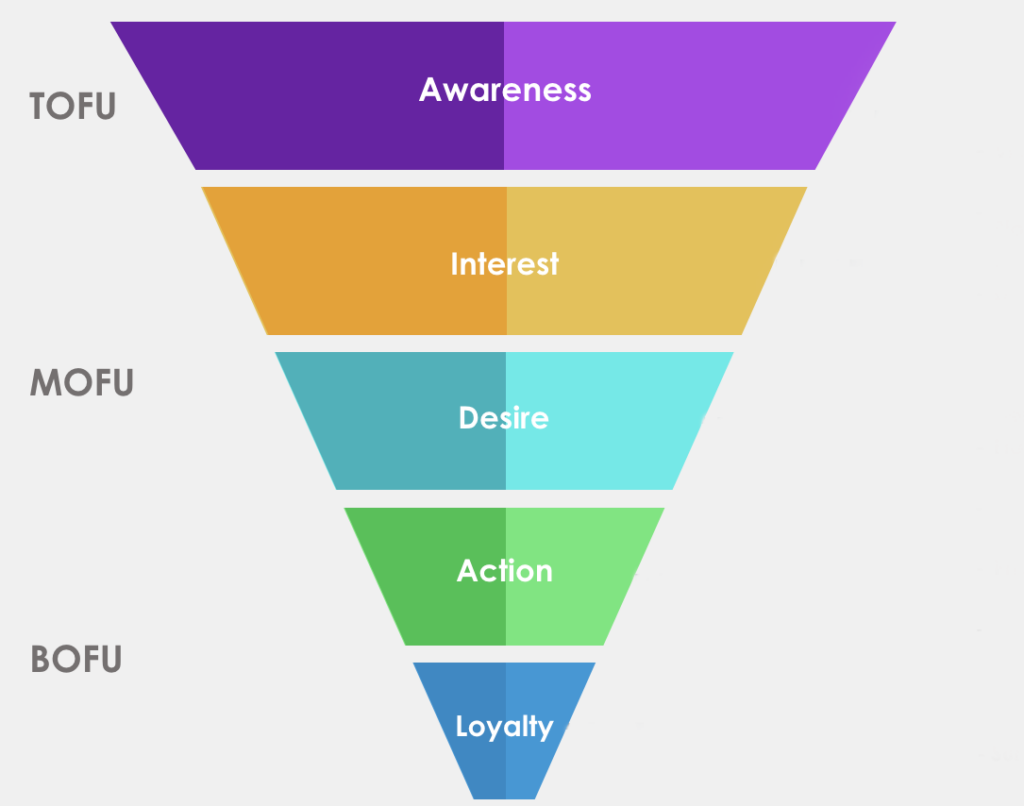
The marketing funnel is often described with the AIDA model, which stands for Awareness, Interest, Desire, and Action. It was originally developed for personal selling, but it still gives digital marketers a simple way to match content to intent. The awareness stage, the top of the funnel, is the widest part. This is where you cast a broad net and introduce yourself to people who may not yet realize they have a problem you can solve.
A funnel is a model, not a law. Real buyers loop back, skip steps, and research in whatever order suits them, and some marketers will tell you the funnel is dead. We still find it useful as a planning tool, as long as you treat it as a guide rather than a rigid path.
How does content relate to the marketing funnel?
The funnel is sometimes called the customer or buyer journey. As someone moves from first noticing a product to making a purchase, they look for different information, and different proof, at each step.
Take a simple example. Say you need a new desk for your home office. Once you decide this is something you need, you head online and research your options: colors, styles, sit or stand, price. At this stage, the top of the funnel, you are just gathering information. You might read articles like "The 10 Best Desks for a Home Office" or "Traditional vs. Standing Desks." Along the way, you spot a desk you like.
Now you are interested. You sign up for the company newsletter and move into the next phase. You start digging into that specific desk: watching a comparison video, reading reviews, checking the measurements. Those reviews and videos build desire.
Then you are ready to buy, and you just need a reason to act now. The content that tips you over should be persuasive: a clear call to action, the right offer at the right moment, or a guarantee that removes the last bit of risk.
Each stage calls for a different kind of content. Top-of-funnel pieces are not built to close a sale. Their job is to earn attention and trust, so that when a buyer is finally ready, you are already part of the conversation. That is also why awareness content should connect to your middle-of-funnel nurturing rather than live on its own.
LimeLight has been invaluable. They helped us with everything from developing the brand to building the website and crafting our marketing strategy. Time and time again they have gone above and beyond. They have been the perfect partner for us.
Brandon Tucker, Executive Director, MPIX
The best types of top-of-funnel content in 2026
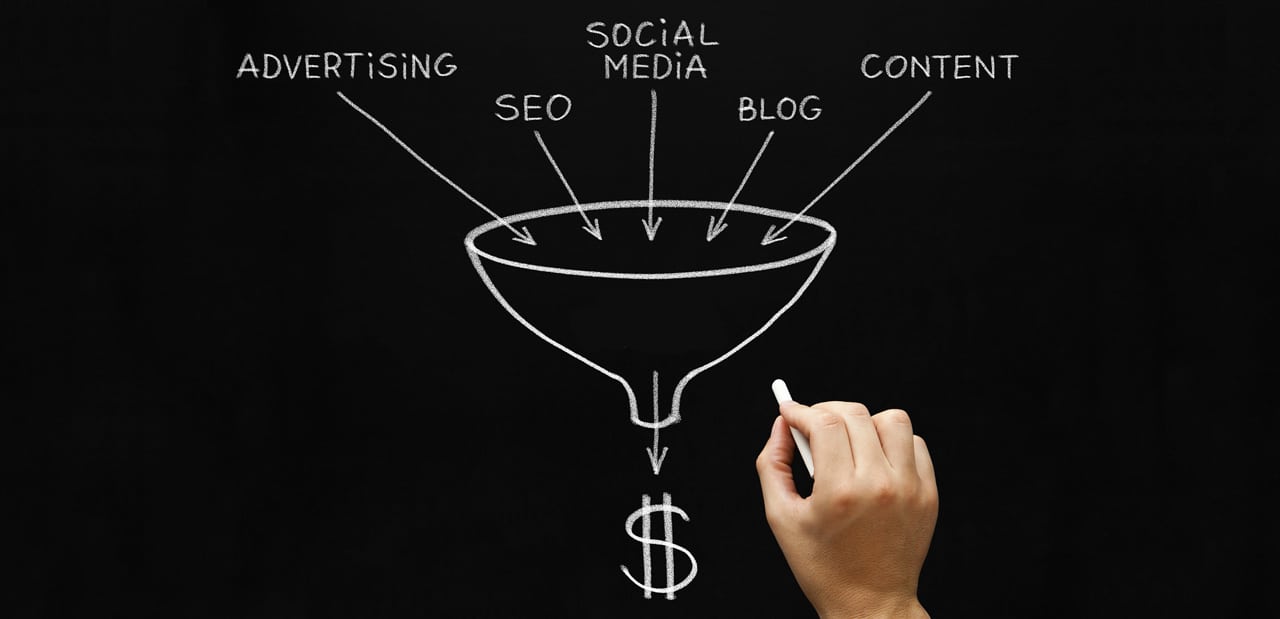
The goal at the top of the funnel is to create awareness and reach the right audience, usually by drawing people to your site or your social channels and giving them a reason to stay in touch. The formats below do that consistently. What has shifted is that awareness is now spread across more places than ever, so the brands that win show up wherever their buyers are already paying attention.
- Blog posts and landing pages. Helpful, well-structured content that is optimized for search is still one of the most dependable ways to reach people early. Publish consistently, answer the questions your audience is actually asking, and make every page work for you by guiding readers toward a clear next step.
- Search and AI answer engines. Discovery is no longer only about ranking on Google. AI assistants and AI overviews increasingly answer a question before anyone clicks a link. Pew Research Center found that people clicked a result on about 8% of searches that showed an AI summary, compared with 15% of searches without one. That makes it essential to create content AI can read, cite, and summarize, which is the heart of answer engine optimization. It is also why we tell clients their site has to be built to be found by AI, not just by people.
- Video and short-form video. Video is now the default. In Wyzowl 2026 survey data, 91% of businesses said they use video as a marketing tool, and B2B marketers rate video the most effective content format they produce, according to the Content Marketing Institute. Short clips on YouTube, Instagram, and TikTok are especially good at sparking awareness because they are easy to watch and easy to share.
- Social media. Social is still one of the most flexible awareness channels for almost any business. It gives you room to be less formal and more human, to join conversations, and to show personality that a search result never can.
- Digital advertising. Paid search, paid social, and retargeting let you reach the right people quickly and with precise targeting. Run alongside strong organic content, advertising can accelerate awareness rather than replace the trust that earned content builds.
- Influencer and creator partnerships. An influencer does not have to be a celebrity. They are simply people who can affect, inspire, and motivate others through their opinions and endorsements. The right partner gives you immediate access to a ready-made audience and lends credibility you cannot manufacture on your own.
How to measure top-of-funnel content
Top of funnel is the hardest part of the funnel to measure, because the payoff is rarely a same-day sale. If you judge an awareness blog by immediate conversions, you will end up cutting the very content that fills your pipeline. Measure it for what it is actually meant to do.
- Reach and qualified traffic. Are you attracting the right people, not just more people? Look at impressions, new visitors, and the quality of the traffic each piece brings in.
- Engagement depth. Time on page, scroll depth, and pages per visit tell you whether your content is holding attention or losing it.
- Branded search and return visits. A rise in people searching for your name, or coming back through email and retargeting, is a strong signal that your awareness work is landing.
- Assisted conversions. Use your analytics to see how often a top-of-funnel piece was an early touch on the path to a lead or sale, even when it was not the last click.
Track those signals over weeks and months, not days, and you will quickly see which awareness content earns its place.
Need help building top-of-funnel content that actually feeds your pipeline? Let us talk.
People also asked:
What is top-of-funnel (TOFU) content?Top-of-funnel content is marketing content created to generate awareness and attract new audiences. It educates, inspires, or creates problem recognition before someone is actively shopping.
Why is top-of-funnel content important in B2B and ecommerce?If buyers do not know you exist, or do not yet understand the problem you solve, they will never make it to the middle or bottom of the funnel. Top-of-funnel content is what fills the pipeline.
What types of content work best at the top of the funnel?High-performing top-of-funnel formats include educational blog posts, guides, social and short-form video, founder or mission storytelling, and problem-awareness landing pages that are also built to be found in AI search.
How do you measure the success of top-of-funnel content?You track reach, qualified traffic, engagement depth, branded search lift, and how often those visitors later return through email, paid retargeting, or organic search.
Should top-of-funnel content include CTAs, or is it just for awareness?It should absolutely include a next step. "Learn more," "see how it works," or a simple email capture is fair, as long as the call to action matches where the buyer is in their journey.